Hampstead Tube station: how London's deepest platforms came to be
Platforms 58.5 metres down, a 320-step spiral staircase and a lost sister station: the story of the Northern line's hilltop landmark.
Most Londoners know Hampstead station as the place where you wait, slightly nervously, for a lift. There is a reason for that, and it has everything to do with the hill above.
According to the Ham & High, the platforms sit a remarkable 58.5 metres (192 feet) below ground level. The lift shaft reaches 55 metres (180 feet). That makes it the deepest station on the Underground, and it also has the network's longest staircase, with 320 steps spiralling up to the street.
A hill, not a grand plan
The depth is not the result of any decision about how far down to dig. The paper reports that it comes from Hampstead's position on one of London's highest hills. The tunnels had to pass underneath it, and lifts had to be installed to carry passengers to the platforms.
Today the lifts remain the main route between platforms and street. The spiral staircase is an emergency alternative, and signs advise passengers not to use it, because climbing it is akin to walking up a 15-storey building.
From quiet village to Tube stop
The Charing Cross, Euston and Hampstead route was first planned in 1893, but work was delayed for a decade. American financier Charles Tyson Yerkes took over the project in 1900 and changed the plan into an electric underground railway. The station opened on 22 June 1907, run by the Charing Cross, Euston and Hampstead Railway.
The Tube's arrival brought fresh connections to what the report calls a hitherto quiet village, giving residents rapid transit into the heart of London and promoting suburban expansion further north to Golders Green and beyond.
Hampstead was hardly short of visitors before that. From the 18th century, crowds came for its famous mineral waters, and later working-class Londoners flocked to the Heath on bank holidays in a phenomenon dubbed 'appy 'ampstead.
Two photographs
The story is told through two images from the collection of Burgh House, Hampstead. One shows the station site around 1900. The other shows the station around the time it opened in 1907.
Oxblood tiles and a lost name
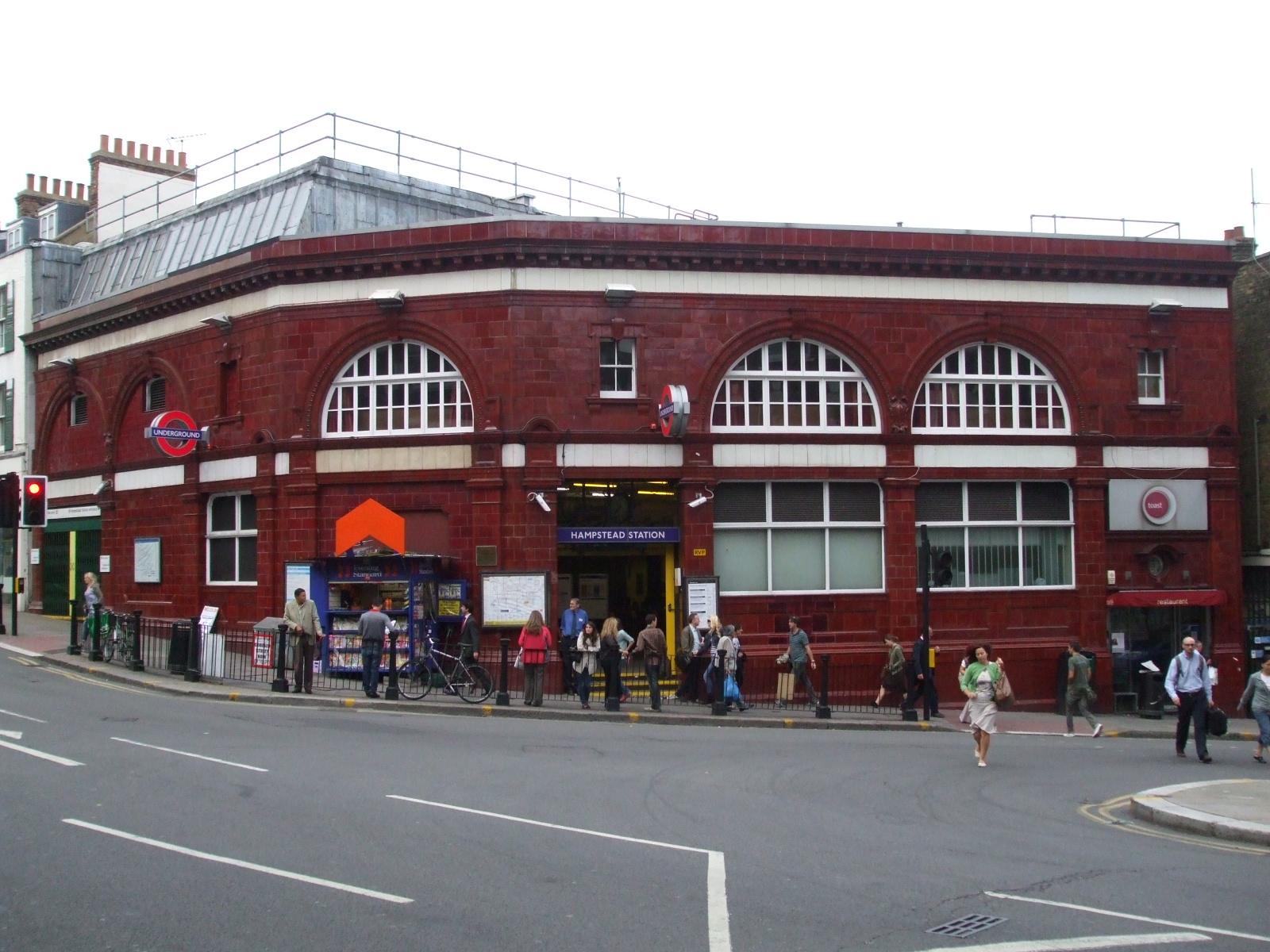
The station was one of 50 designed by architect Leslie Green across the Tube network between 1903 and 1907. Their glazed oxblood terracotta tiles and semi-circular first-floor windows have become an icon of London design.
It sits at the junction of Heath Street and Hampstead High Street. Look closely on the platforms and you can still find original tiled signs carrying the station's proposed name, Heath Street, before it was changed.
The station that never opened
The line was also meant to continue north to a station called North End, beneath Hampstead Heath. The land bought in the hope of developing around it ended up being turned into the Hampstead Heath extension.
That station, known as the Bull and Bush after the famous pub on North End, never opened to the public and is one of the Underground's ghost stations. Hampstead, meanwhile, stayed in service and kept its place as the deepest point on the Tube network.
Know before you go
- Hampstead station is at the junction of Heath Street and Hampstead High Street.
- It serves the Edgware branch of the Northern line, between Golders Green and Belsize Park.
- Lifts are the main route to the street. The spiral staircase is for emergencies only.
Sources: Ham & High, Islington Gazette